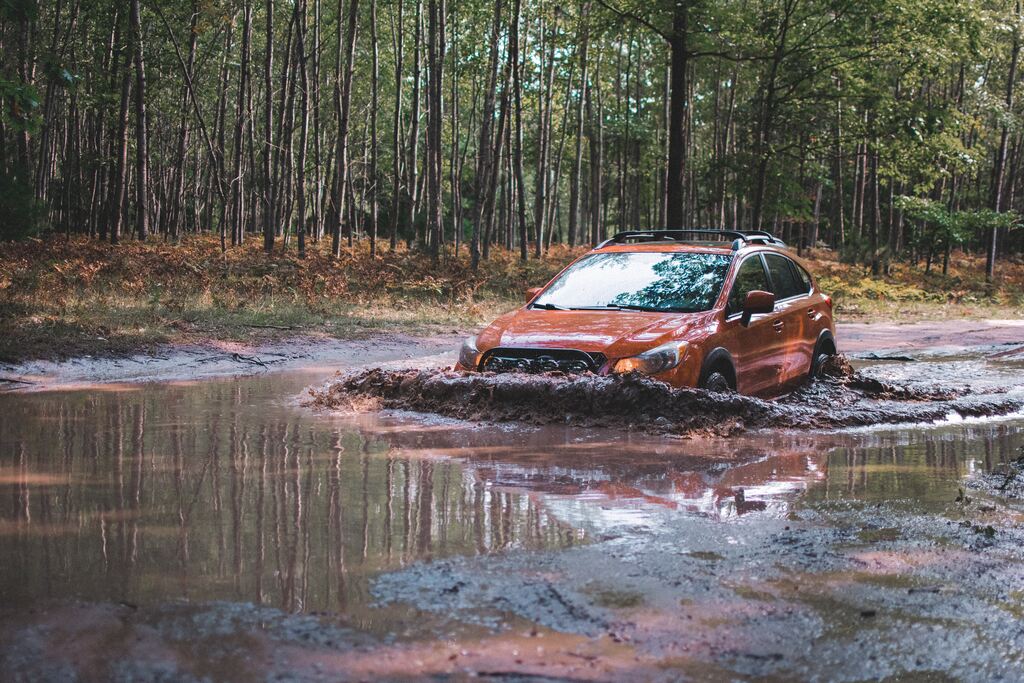
You find yourself on some random dirt trail off some back road that looked fun so you could throw around your new to you Subaru. While its slight advantage in ride height and AWD has helped you get this far, you come across some deep muddy ruts with an almost perfectly placed rock that could play the role of a can opener to the bottom of your car. Now, just a few inches of lift to your car would have made that just another fun obstacle on your rip around the woods.
If the thought of lifting a car or SUV seems a bit odd to you or you think lifting a vehicle is only reserved for trucks or 4WD vehicles, read on.
You might be surprised to know that not only are car/SUV lifts common in the soft roading community and are also one of the first modifications, but there’s substantial aftermarket parts support for just that.
So if you are considering lifting your soft-roader, here’s your guide to lift kits for cars and why you should lift your car or SUV.
We just wanted to give a heads up, this post contains some affiliate links which means we may receive a commission at no extra cost to you, if you click a link and purchase something. As an Amazon Associate, I earn from qualifying purchases. Full disclosure policy here.
Should I lift or lower my car?
As for soft roading, the higher the ground clearance the better. The added height from a lift kit will allow your vehicle to pass over more obstacles. The lowering kit will do just that, lower the ground clearance of your vehicle. But the lowering kits are usually used for on-road vehicles for increased performance on the track or for aesthetics.
Is it expensive to lift a car?
A key question you’re probably asking is, how much does it cost to lift a car?
Depending on what lift you get, the price can vary from hundreds to thousands of dollars from each manufacturer. This also does not include installation, so you need to consider whether you are willing to do the work yourself or need to bring it to a professional.
Is it better to lift the body or suspension?
If you are looking for better performance off-road, then a suspension lift is the best option. It will raise the body of your vehicle further from the ground and increase suspension travel.
A body lift will raise your vehicle’s stock suspension with spaces so there’s no need to change the shocks, allowing for bigger tires. A body lift is a cheaper option than a suspension lift in most cases, but it definitely has its limitations in performance.
Does a lift kit decrease value?
It really depends on the quality of the lift, how it’s installed, and who you are selling it to. These factors could either increase its potential value or decrease it. You’re more likely to see an increase when selling it to someone who is in the market for a lifted vehicle. However, you could also get a decrease in value if there’s damage done when installing the lift or how it was used.
Do lift kits void warranty?
Not usually, but within reason. If the modifications led to damaging the vehicle, then this might affect the warranty of the vehicle. The manufacturer should outline its policies regarding modifications, so make sure to double-check before you jump into the project. Then ultimately it’s up to you whether you want to cross that threshold.
Do I need bigger tires if I lift my vehicle?
Bigger tires are not necessary, but if you want to take your vehicle on rougher terrain then buying all-terrain tires is recommended. Bigger tires will add a larger footprint to your vehicle for traction on the dirt, increase your ride height, and also look pretty cool too.
Do lift kits affect ride quality and driving?
With any modifications to a vehicle, you can expect changes to how your vehicle performs compared to stock. Lift kits will raise your vehicle’s center of gravity, which means your vehicle is more susceptible to rolling when turning at higher speeds.
Should you lift your car: the pros and cons of lift kits
So, should you lift your car or SUV? From the soft roading point of view, yes. There will be many scenarios where having a lifted car or SUV will greatly improve your offroad performance, be able to clear obstacles, and make throwing your car around the dirt way more fun!
Soft roading or off-roading in general is about going beyond the pavement. When you take a vehicle on a trail or dirt road you’ll be going through places that aren’t necessarily well maintained, unlike regular paved roads. The extra ground clearance from lifting your vehicle enables you to handle deeper water, rough uneven terrain, improve the approach/departure angles of your vehicle on hills, and clear rocks and debris that before a lift you wouldn’t even dare tackle. It also gives you better visibility since your vehicle will be higher off the ground.
What are the disadvantages of lifting a car?
There can also be some drawbacks to having a lifted vehicle as well. With being higher, the vehicle could have more wind resistance which could impact your fuel economy (especially adding larger tires which increases your vehicle’s weight).
Having a higher vehicle also shifts its center of gravity up which could make it more susceptible to rollovers, and the expense that comes with the purchase and installation of parts (more wear and tear on these parts as well should also be considered).
You might also need to carry a bigger car jack and if you get larger tires as well, you’ll need to factor in potentially carrying a full-size spare as well.
All these factors should be considered when choosing to go through with lifting your car or SUV.
Summary: why lift cars and SUVs for off-road and soft-road adventures
Ultimately, your experience of soft roading or off-roading is going to be far better when you have a lifted vehicle. This makes your vehicle more capable, gives your vehicle some added protection from the rough terrain below, and allows you to have more fun on your adventures outdoors.
Leave a Reply